Understanding healthy fats and how they work with a fitness routine has changed the way I eat and train. I used to think fats were always something to avoid, but learning about the different types of fats and their roles in the body made me reconsider. Including the right fats in my diet has improved my energy, recovery, and even helped with keeping my meals satisfying. In this article, I’ll share which fats I include in my daily eating, why they matter, and how they can support anyone’s fitness goals.
Understanding Dietary Fats: The Basics
Fats are not all the same. I found that out pretty quickly once I started reading nutrition labels and doing research. When nutritionists talk about fats, they split them into four main types. Here’s how I break them down and what I look for:
- Saturated fats: These are found in animal products like cheese, butter, red meat, and also tropical oils such as coconut oil. Some saturated fat is fine, but too much can raise LDL cholesterol.
- Trans fats: Mostly found in processed foods and hydrogenated oils. I always avoid these since they can increase heart disease risk and offer no real benefit.
- Monounsaturated fats: Common in olive oil, avocados, and many nuts. I include these often because they help the heart and are easy to add to salads, meals, and snacks.
- Polyunsaturated fats: These are found in foods like walnuts, sunflower seeds, flaxseeds, and fatty fish. They include omega-3 and omega-6 fatty acids, which the body can’t make on its own.
The four main fats are: saturated fats, trans fats, monounsaturated fats, and polyunsaturated fats. Knowing the difference helps me shape my meals around what really benefits energy, health, and recovery.
Healthy Fats to Add to Your Diet
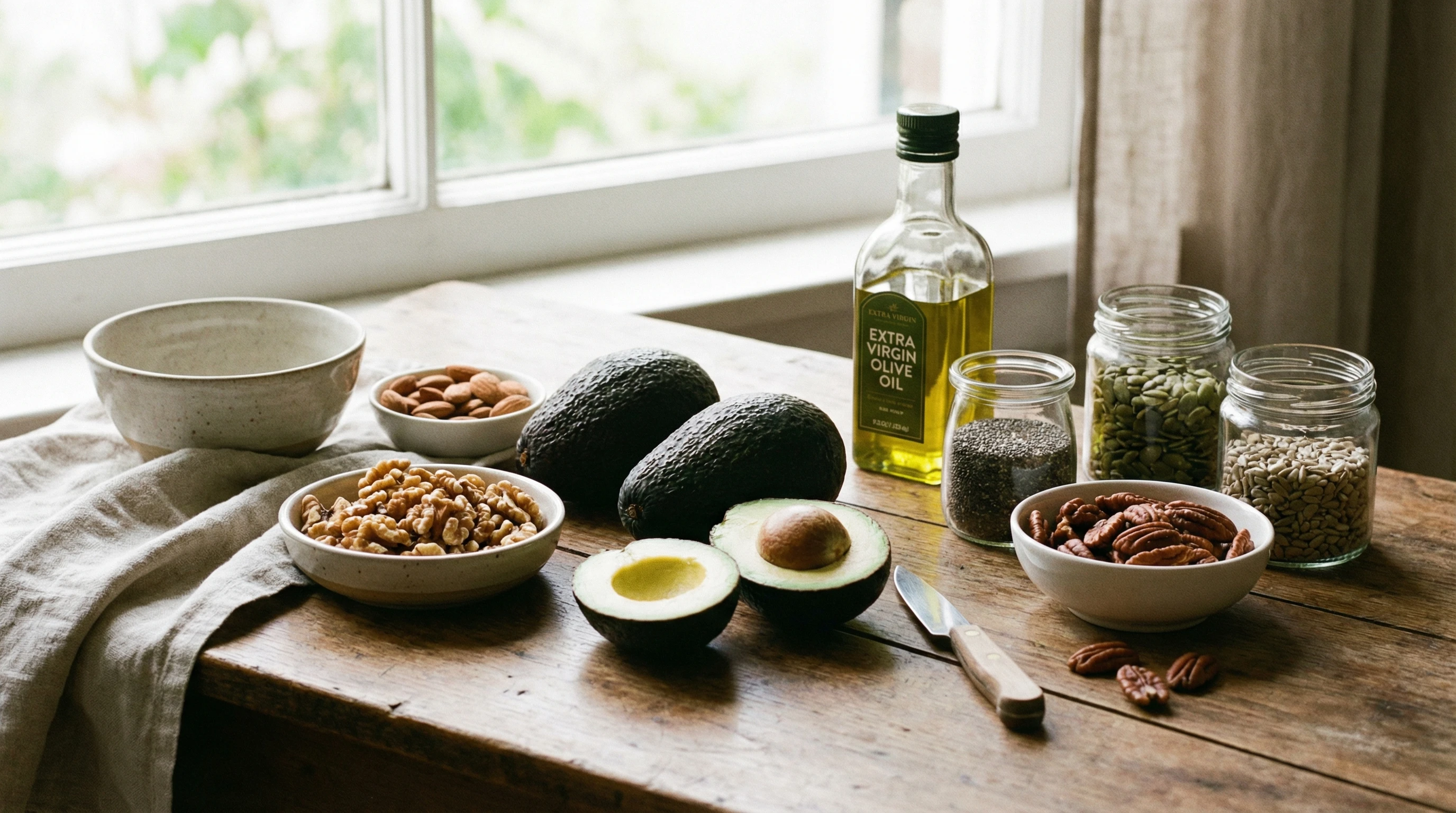
Including healthy fats in my diet started with small changes. I swapped certain cooking oils and added specific foods to my grocery list. Here are the healthiest fats I now use regularly:
- Avocados: They are packed with monounsaturated fats and also provide fiber and potassium. Add avocados to salads and sandwiches, or even blend them in smoothies for creaminess.
- Olive Oil: Especially extra virgin olive oil, which is a good source of monounsaturated fat. I use it as my main salad dressing or drizzle it over roasted vegetables.
- Nuts: Almonds, walnuts, pistachios, and cashews are all solid options. I keep a mixed jar handy for snacks or sprinkle nuts over oatmeal or yogurt.
- Seeds: Chia, flax, hemp, and pumpkin seeds add both crunch and healthy fats. I often stir them into yogurt or use them as a topping.
- Fatty Fish: Salmon, sardines, trout, Tuna and mackerel are all rich in omega-3 fatty acids.
- Coconut Oil (in moderation): It’s higher in saturated fat, so keep this to a small portion of your routine.
- Beef tallow and butter: Great for cooking and adding flavor to your food. Both contain important nutrients like vitamins A, D, E and K, and conjugated linoleic acid. But just like Coconut Oil, use in moderation due to its high saturated fat content.
- Nut Butters: Peanut butter and almond butter are both popular choices. I use these as a spread, a dip for fruit, or mix them into smoothies for extra energy.
Making these swaps didn’t just change the way my meals tasted; they also helped me feel more satisfied. Plus, they give a steady supply of energy that supports workouts and workout recovery. Healthy fats help your body absorb certain vitamins, like A, D, E, and K, which are vital for overall health. Eating enough of these good fats can also be a real game changer for your immune system and skin health. Adding more healthful fat sources such as extra nuts or seeds, can help people who need more calories for intensive training or building muscle. Smarter fat choices go a long way when building a diet for wellness and performance.
Healthy Fats and Exercise Performance
When I focus on my fitness, the fats I eat play a direct role in my performance. Healthy fats provide long-lasting energy, and they help support muscle recovery, hormone production, and even lower inflammation, which comes in handy after intense sessions.
The best healthy fats for exercise are:
- Omega-3 rich foods: Like salmon, sardines, walnuts, and flaxseeds. These help reduce exercise-related inflammation and may support joint health.
- Monounsaturated fats: Olive oil, avocado, and nuts provide the kind of fat that fuels my endurance during cardio workouts.
- Medium chain triglycerides (MCTs): Found in coconut oil. Some studies suggest MCTs can be used quickly for energy.
During intense exercise, the body burns carbohydrates first, but for longer or less intense sessions, the body will turn to fat as a fuel source. Having a good, balanced mix of healthy fats helps provide stable energy, especially for endurance activities like running or cycling. Sometimes athletes might try very low fat diets, especially during “cutting” phases, but this approach could backfire—hormones, joint health, and recovery may suffer if fats dip too low. It’s important to listen to your body, keep fat intake consistent, and make adjustments based on activity level and personal preference.
What is the 3-3-3 Rule for Eating?
The 3-3-3 rule is an easy way to remember how to balance fats, proteins, and carbohydrates in your meals. This method recommends that you structure each meal with:
- 3 servings of lean protein,
- 3 servings of healthy fat,
- 3 servings of complex carbohydrates or vegetables.
For example, a balanced lunch could look like grilled chicken (protein), half an avocado and a sprinkle of nuts (healthy fats), plus a large serving of steamed broccoli and brown rice (complex carbs/vegetables). I find this rule keeps your meals simple, balanced, and filling. It also helps you to not overthink portion sizes or meal composition. The 3-3-3 rule works well for meal prepping, especially if you’re looking to make sure you’re hitting all your macronutrients without tracking every detail. It’s adaptable for different dietary needs and helps avoid boredom, since you can switch up the ingredients as you like.
What to Watch Out For: Less-Healthy Fats
Not all fats are beneficial, and I try to limit or avoid certain types as much as possible:
- Trans Fats: Often labeled as “partially hydrogenated oils” in baked goods, fried foods, or packaged snacks. These increase bad cholesterol and lower good cholesterol.
- Too Much Saturated Fat: While small amounts are fine, diets that are very high in saturated fats may increase heart disease risk. I get most of my saturated fat from whole foods like eggs or dairy, and less from processed meats.
Reading food labels and aiming for foods with little or no trans fat makes a real difference in how I feel, especially for workouts and energy levels throughout the day. It’s helpful to check processed food ingredients, since marketing can sometimes be misleading—just because a food says “contains olive oil” doesn’t mean it’s a good source of healthy fat. Checking for hidden fats can help anyone looking to clean up their diet.
Overcoming Common Challenges with Fats and Fitness
I ran into a few roadblocks when changing my eating habits to include more healthy fats. Here’s what helped me stick with it:
- Meal Planning: Having nuts, seeds, or avocados handy makes hitting my daily fat goals much easier. I plan out my dinners for the week so I always have a healthy fat source ready.
- Portion Control: Fats are caloriedense, so even the healthy ones need to be measured. For nuts and seeds, I use a small cup, and for oils, I measure out with a spoon.
- Trying New Recipes: Exploring Mediterraneanstyle dishes or learning new ways to cook salmon added variety and kept me motivated.
Meal Prep Example
On the weekend, I prepare a few servings of brown rice, roast some sweet potatoes, wash and store greens, buy avocados, and pack snack bags with almonds or walnuts and seeds. With these ready to go, building a meal following the 3-3-3 rule is quick and easy. Over time, making these preparations turned eating healthful fats into a habit, rather than a chore. Even if you don’t have time to cook every night, just a bit of planning can help keep your nutrition on track.
Expert Tips for Getting the Most from Healthy Fats
I’ve picked up some simple tips that work well for including healthy fats, especially for anyone with a fitness focus:
- Add a tablespoon of olive oil to soups or roasted veggies to make the meal more satisfying.
- Swap butter for avocado on toast to get more hearthealthy fats with a creamy texture.
- Mix chia or flaxseed into oatmeal or yogurt for extra omega-3s without much change in flavor.
- Top steamed veggies with a handful of seeds or nuts for crunch, flavor, and healthy fat.
- Carry single-serve nut butter packets or portions of trail mix for snacks on busy days.
Some days I forget to include these fats, but reminding myself of how good I feel with a balanced diet pushes me to stay consistent. If you’re new to healthy fats, try introducing one new option a week and track how you feel before and after workouts. Take notes—you might stumble upon a combo that really makes meals more enjoyable and boosts your fitness progress.
Get Started with Healthy Fats and Move Toward Your Fitness Goals
Packing my kitchen with healthy fats took some trial and error, but now it’s part of my routine. Paying attention to what types of fats I’m eating makes me feel stronger and more energetic. Simple swaps, meal planning, and trying new recipes have kept meals interesting and supported every step of my fitness adventure. No matter your starting point, including the right fats and building habits around them will help you reach your energy, recovery, and wellness goals; plus, you’ll enjoy meals that leave you satisfied and ready to take on your next workout.